What Trade Shows Can Learn From Turning a Booth Into a Game
Trade shows are loud and chaotic. Visually, emotionally, and cognitively. Attendees move fast, filter aggressively, and decide in seconds what deserves their time.
At events like IMEX America, where thousands of exhibitors compete for attention, the challenge is not foot traffic alone. It’s meaningful engagement. The kind that leads to real conversations, qualified leads, and long-term brand recall.
So what actually works?
One answer lies in understanding how people behave on a show floor and designing for that reality rather than against it.
Attention Is a Scarce Resource
Most trade show booths rely on familiar tactics: screens, counters, branded backdrops, and staff waiting to engage with attendees. The problem is not effort. It’s sameness.
When everything blends together, attendees default to motion. They keep walking.
Experiential design changes that equation by creating an interruption. Not interruption through noise, but through curiosity. Something tall enough to be seen from across the floor. Something active enough to spark interest. Something human enough to feel inviting rather than transactional.
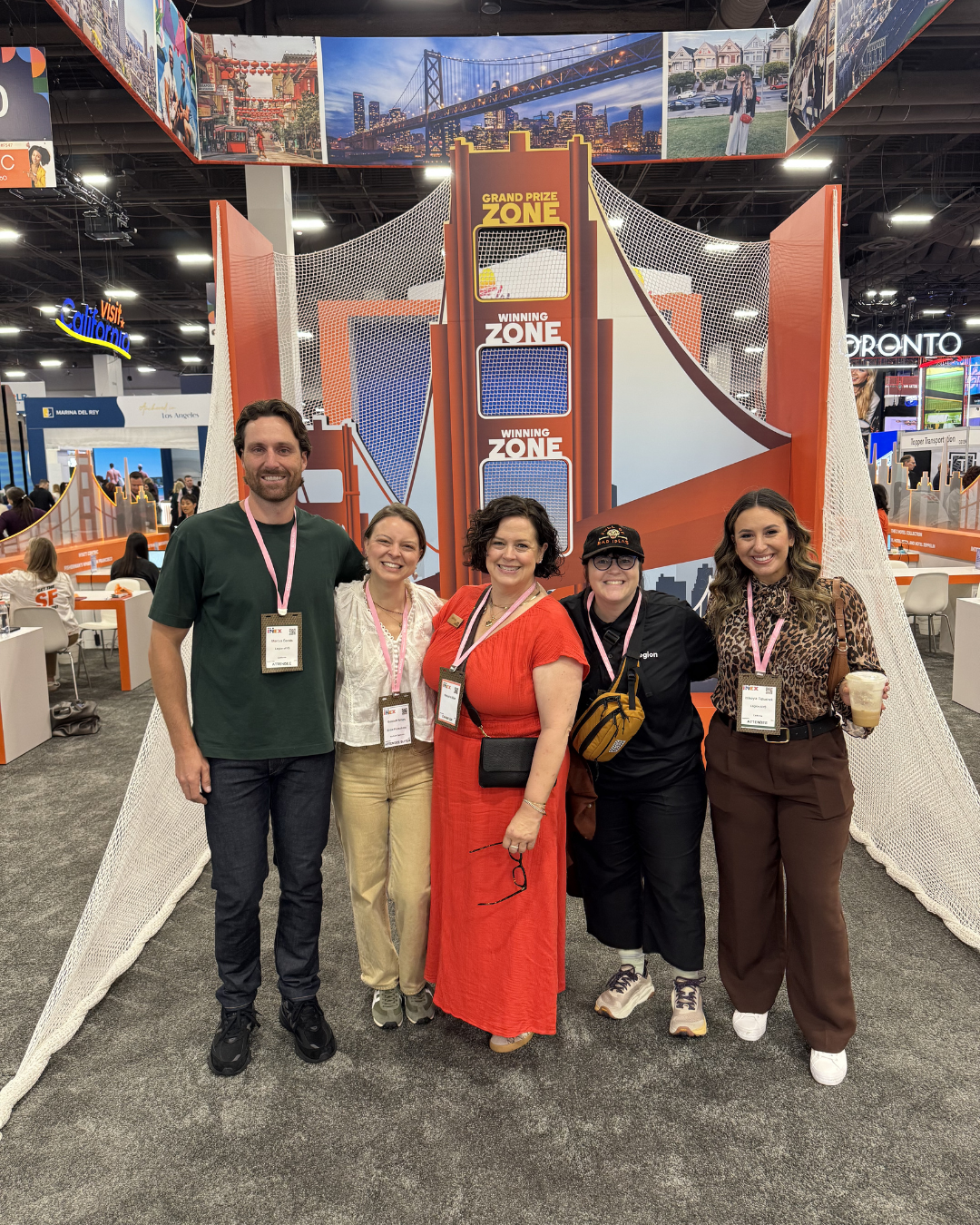
At IMEX America, this approach came to life through a 13-foot-tall Golden Gate Bridge structure that immediately broke the visual pattern of the show floor. It created a landmark that attendees could spot from a distance and move toward with intention.
Why Physical Participation Matters
Passive viewing rarely leads to memory. Participation does.
When people are asked to do something physical, even something simple, they slow down. They engage their body, not just their eyes. That moment of play creates emotional openness, which is when conversations become easier and more genuine.
In this case, a football throw did more than entertain. It provided:
A natural reason to stop
A shared experience between strangers
An easy entry point for conversation
A moment of joy in an otherwise busy day
At the SF Travel booth, attendees stepped up to throw foam footballs through targets embedded in the Golden Gate Bridge. The gameplay was simple, fast, and inclusive, making it easy for anyone to participate without hesitation.
Those elements are difficult to achieve through signage alone.
Designing for Flow, Not Disruption
A common concern with experiential booths is disruption. Sponsors worry about noise. Sales teams worry about distractions. Attendees worry about time.
Strong experiential design solves for flow rather than fighting it.
The activation was intentionally built to:
Pull traffic inward while protecting meeting zones
Move participants through quickly without creating congestion
Allow conversations to continue alongside the experience
Support sponsor objectives instead of competing with them
The design was carefully planned for the SF Travel booth so gameplay drew energy into the booth while preserving dedicated space for sponsor meetings. The experience enhanced the environment instead of overwhelming it.
When experiences are designed as part of the ecosystem, not an add-on, they elevate everything around them.
Play as a Qualification Tool
Not every lead is equal. One of the most overlooked benefits of experiential activations is the opportunity for self-selection.
People who choose to participate are already raising their hands. They are open, curious, and willing to engage. That makes the follow-up conversation more natural and more valuable.
By integrating lead capture directly into gameplay, qualification happened organically. No forced pitches. No awkward transitions. Just interaction first, conversation second.
At the SF Travel activation, badge scans and lead capture were seamlessly built into the game flow, resulting in over 1,500 qualified leads across three days. Participation naturally filtered for high-intent attendees.
The Power of Visual Landmarks
Height and scale matter on a show floor. A tall, dimensional structure acts as a beacon. It gives people a destination, not just a booth number.
Iconic visuals do more than attract attention. They anchor memory. Attendees may forget where they picked up a brochure, but they remember where they threw a football under a Golden Gate Bridge.
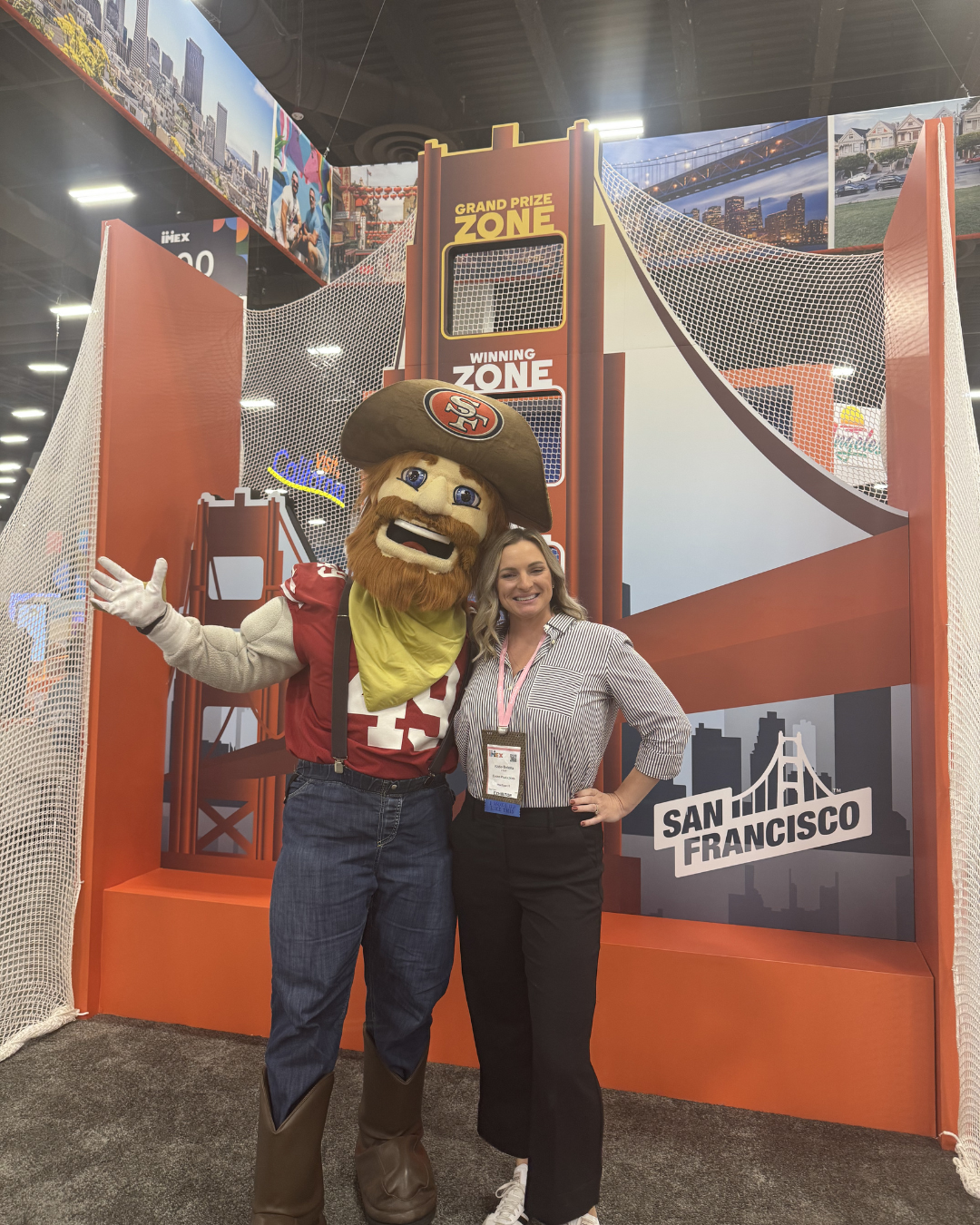
By translating one of San Francisco’s most recognizable landmarks into a playable structure, the booth became both a visual anchor and a physical memory trigger tied directly to the destination.
That kind of spatial memory carries long after the event ends.
Energy Is Contagious
Staffing is often treated as logistics. In reality, it is part of the experience design.
High-energy, well-trained brand ambassadors shift the tone of a booth. They create momentum. They invite spectators to become participants. They turn curiosity into confidence.
When people see other people having fun, they want to be part of it.
Referee-style game coaches brought stadium-level energy to the booth, guiding gameplay, managing flow, and encouraging participation. Surprise appearances from San Francisco mascots added an extra layer of excitement and shareable moments.
Measuring What Matters
Experiential marketing is often criticized for being hard to measure. That criticism usually comes from unclear goals.
When objectives are defined early, metrics become obvious:
Engagement volume
Dwell time
Lead quality
Sponsor satisfaction
On-site meeting conversions
Organic social reach
Experiences can drive ROI, but only when they are designed with intention rather than spectacle.
In this case, the results were clear: over 1,000 participants, 500+ badge scans per day, and consistent crowd density throughout the show. Just as importantly, sponsors reported stronger conversations and increased engagement within the space.
The Bigger Takeaway
Trade shows are not just about presence. They are about positioning.
When brands create moments that feel human, playful, and thoughtfully designed, they signal confidence. They show they understand their audience. They prove they are worth stopping for.
The lesson is not to build bigger booths. It’s to build better experiences.
The SF Travel activation demonstrated how play, cultural relevance, and smart spatial design can transform a booth into a destination. It wasn’t just about visibility. It was about creating a moment people chose to be part of.
On a crowded show floor, the brands that win are the ones that invite people to participate, not just observe.
Check out our case study about the SF Travel Booth at IMEX!
